
Choosing a sober living home can feel overwhelming, especially when several programs appear similar at first. While every home aims to support recovery, they can differ in structure, expectations, leadership, recovery culture, and daily life.
Knowing what to compare can help you make a more confident decision based on your recovery needs rather than marketing claims or location alone.
How Do You Compare Sober Living Homes?

The best way to compare sober living homes is to look beyond amenities or location. Focus on daily structure, accountability, recovery support, house expectations, leadership, safety, and whether the environment matches your recovery goals. The right sober living home is not necessarily the most popular one; it is the one that best supports your stage of recovery and long-term stability.
Why Choosing the Right Sober Living Home Matters?
Not all sober living homes operate the same way. Some provide highly structured environments with clear expectations and regular accountability, while others offer greater independence. Neither approach is automatically better – the right choice depends on where someone is in recovery and what level of support they need.
Why comparing homes matters
- Recovery homes vary in structure, leadership, and daily expectations.
- Accountability may look different from one program to another.
- House culture can influence motivation and long-term consistency.
- Recovery support often extends beyond simply providing a place to live.
- Finding the right fit may improve the transition from treatment to independent living.
Choosing a sober living home is less about finding the “best” program and more about finding one that aligns with your personal recovery goals. Taking time to compare different options can reduce uncertainty and make the decision feel more informed.
If you’re new to recovery housing, it may help to first understand the purpose of sober living itself. To learn more, read What Sober Living Actually Provides.
Start With Your Recovery Goals
Before comparing programs, take a step back and think about what you need from sober living right now. A home that works well for one person may not provide enough structure – or may provide more than necessary – for someone else.
Questions to ask yourself
- Am I leaving residential treatment or returning after a relapse?
- How much daily accountability would help me stay on track?
- Will I be working, attending school, or both?
- Do I need ongoing outpatient treatment or other recovery services?
- How important is location near family, work, or support systems?
- Am I looking for more structure or more independence?
Matching your needs to the program
| Recovery Need | What to look for |
|---|---|
| Early recovery | Greater structure and accountability |
| Returning after relapse | Clear expectations and consistent recovery support |
| Working or attending school | Flexible schedules with balanced accountability |
| Continuing treatment | Easy coordination with outpatient services |
| Building independence | Opportunities to practice healthy routines while maintaining support |
Recovery goals often change over time, so choosing a home that fits your current stage is usually more helpful than choosing one based only on convenience or recommendations from others.
It is also normal for people to feel uncertain when comparing sober living homes. Recovery is highly personal, and the right environment often depends on how much accountability, community, and independence someone feels ready for. Rather than searching for a universally “best” program, focus on finding the environment that gives you the greatest confidence in your next stage of recovery.
Many women and men enter sober living after completing a higher level of care. If you’re wondering when recovery housing makes the most sense after treatment, read Can Sober Living Help After Treatment?.
Seven Things to Compare Before Choosing a Sober Living Home
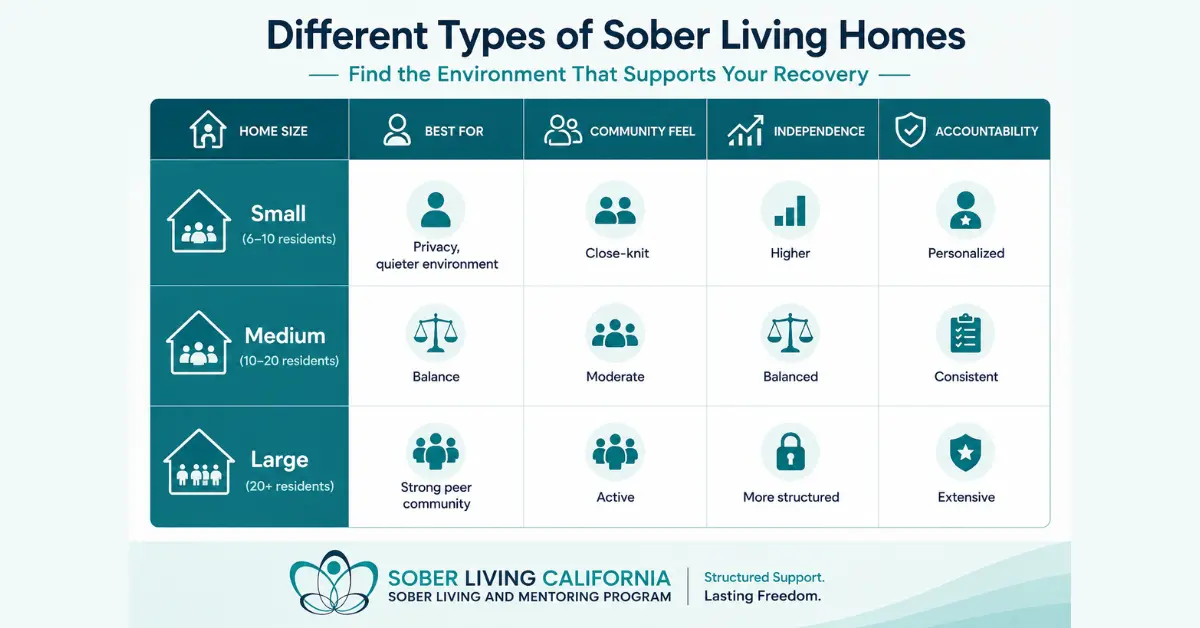
Neither is better.
Different personalities thrive in different environments.
Someone rebuilding confidence after treatment may appreciate a larger recovery community.
Someone who values independence and a quieter environment may feel more comfortable in a smaller home.
This perfectly supports the psychology you described when creating the content brief.
Seven Things to Compare Before Choosing a Sober Living Home
Comparing sober living homes becomes much easier when you focus on the factors that directly influence everyday recovery. Rather than choosing based on location or appearance alone, evaluate how each home supports long-term stability and whether it aligns with your personal recovery goals.
Structure & Daily Routine
Structure & Daily Routine
Daily structure is often one of the biggest differences between sober living homes. Ask how the day is organized and whether expectations are clearly communicated.
Compare:
- morning and evening routines
- curfews and house schedules
- meeting attendance requirements
- chore expectations
- work and school flexibility
Why it matters: Predictable routines can help create stability while supporting healthy habits that become easier to maintain over time.
Accountability
Every sober living home has expectations, but accountability may be handled differently from one program to another. Understanding how a home encourages responsibility can help you determine whether it matches your recovery needs.
Compare:
- drug and alcohol testing policies
- attendance expectations
- progress check-ins
- responses to rule violations
- communication around accountability
Why it matters: Consistent accountability helps reinforce healthy decisions while creating an environment where recovery remains the priority.
Recovery Community
Recovery is often strengthened by the people surrounding you each day. While every home has its own culture, it helps to understand how residents support one another and contribute to the overall recovery environment.
Compare:
- recovery-focused house culture
- peer encouragement
- shared responsibilities
- opportunities for connection
- overall atmosphere within the home
Why it matters: A positive recovery community can make daily life feel more supportive and encourage long-term consistency.
If you’d like a closer look at what everyday life in recovery housing typically involves, read What Is Sober Living Like Day to Day?
House Leadership
Strong leadership helps create consistency throughout the home. Ask who oversees the residence and how expectations, communication, and resident concerns are managed.
Compare:
- onsite or offsite management
- staff accessibility
- communication style
- conflict resolution process
- experience supporting recovery
Why it matters: Clear, consistent leadership often helps residents understand expectations and creates a more stable living environment.
Safety & Environment
Feeling comfortable in a recovery home involves more than the physical property. Consider whether the environment supports focus, accountability, and long-term recovery.
Compare:
- cleanliness and organization
- house expectations
- neighborhood suitability
- overall atmosphere
- respect for shared living spaces
Why it matters: A safe, well-managed environment allows residents to focus more on recovery and less on unnecessary stress.
Location & Lifestyle Fit
Location should support your recovery rather than simply offer convenience. Think about how a home’s surroundings fit with your daily responsibilities and long-term goals.
Compare:
- distance from work or school
- proximity to outpatient care
- transportation options
- access to recovery meetings
- connection to healthy activities
Why it matters: The right location can make it easier to maintain routines and stay engaged with recovery.
Transition Planning
Recovery continues after sober living, so it helps to understand how a program prepares residents for greater independence over time.
Compare:
- discharge planning
- continued recovery resources
- goal setting
- life skills support
- planning for independent living
Why it matters: Good transition planning helps residents prepare for life beyond sober living rather than focusing only on the time spent in the home.
Leadership influences much more than house operations. Consistent communication, fair expectations, and approachable staff often help create a recovery environment where residents know what is expected and feel comfortable asking for guidance when challenges arise.
Choosing a sober living home is rarely about finding a perfect program. It is about finding one that provides the right balance of structure, accountability, support, and independence for where you are today.
Questions to Ask Every Sober Living Home

Even after narrowing your options, asking thoughtful questions can help you understand how each home actually operates. The answers often reveal much more than a website or brochure.
Questions worth asking
- How are house expectations explained to new residents?
- How is accountability handled?
- What happens if someone relapses?
- Can residents work or attend school?
- How are conflicts between residents managed?
- How long do people typically stay?
- What recovery expectations exist outside the house?
The goal is not to interview the program but to understand whether its approach aligns with your recovery needs. Listening carefully to how staff explain expectations can often tell you as much as the answers themselves.
Whenever possible, schedule a tour or virtual walkthrough. Seeing the home firsthand, meeting staff, and observing the overall atmosphere often provides insights that are difficult to capture through a website or phone conversation alone.
For a more detailed list of evaluation questions, read Questions to Ask Before Choosing a Sober Living Home.
Red Flags to Watch For
Not every sober living home provides the same level of structure or recovery support. While no program is perfect, certain warning signs may suggest a home is not well equipped to support long-term recovery.
Potential red flags
- Unclear or inconsistent house expectations
- Limited accountability or inconsistent rule enforcement
- Poor communication from staff or house leadership
- Unsafe or poorly maintained living conditions
- Limited recovery support or encouragement
- Residents who seem unfamiliar with house policies
- Little discussion of recovery goals or daily structure
A single concern does not automatically mean a home is the wrong choice. However, if several of these issues appear together, it may be worth exploring other options before making a decision.
Taking time to evaluate these details can help you avoid unnecessary challenges later. To learn about some of the common obstacles residents may face, read Common Challenges in Sober Living.
Why the Best Sober Living Home Is Different for Everyone?

There is no single sober living home that is right for every person. The best choice depends on your stage of recovery, daily responsibilities, support needs, and long-term goals.
The right fit often depends on:
- How much daily structure you need
- Whether you're returning from treatment or another recovery setting
- Work, school, or family commitments
- The level of accountability that supports your recovery
- Proximity to treatment, meetings, or support systems
- Your plans for greater independence over time
- Preparing for independent housing
- Maintaining recovery routines
- Employment planning
- Continuing outpatient care, if appropriate
- Building long-term recovery goals
| Rather than asking | Consider asking |
|---|---|
| Which home is the best? | Which home best fits my recovery needs? |
| Which home is closest? | Which location best supports my recovery? |
| Which program has the most amenities? | Which program provides the support I need? |
| How quickly can I move in? | Is this the right environment for long-term success? |
The goal is not to find the most popular program. It is to find an environment where you can build healthy routines, strengthen recovery, and prepare for lasting independence.
Location can also influence your overall experience. If you’re deciding whether staying close to home or starting fresh elsewhere makes more sense, read Should You Stay Local or Move for Recovery?
Real-Life Example
Imagine two people leaving treatment. One plans to return to college and needs flexibility around classes. Another is rebuilding after several relapses and wants more daily accountability. While both may benefit from sober living, the type of home that supports each person’s recovery may look very different.
Comparing Sober Living Homes Can Make Your Decision Easier
Choosing a sober living home is an important decision, and taking time to compare your options can help you move forward with greater confidence. Looking beyond location and focusing on structure, accountability, recovery support, and overall environment often leads to a better long-term fit.
If you’re exploring sober living options in California, remember that the right home is the one that best supports your recovery goals – not simply the closest or most convenient choice.
To better understand the qualities that often contribute to successful recovery housing, read What Makes Some Sober Living Homes More Effective?
If you are still comparing several sober living homes, our guide on how to check a sober living home lists the questions to ask, and the Los Angeles page lists homes you can call directly. This site is run by Design for Recovery; homes it runs, and Bridges Sober Living Apartments homes, are labeled “Affiliated with this site” and are listed first.