

Moving into sober living is an important recovery decision, and the evaluation process deserves careful consideration. While many homes may appear similar on the surface, differences in structure, accountability, support, and expectations can significantly influence the overall experience.
Some differences may not become obvious until after someone moves in, which is why asking thoughtful questions before making a decision is so important.
Asking the right questions can help you compare options more effectively and identify an environment that aligns with your recovery goals, support needs, and long-term plans.
Why Asking The Right Questions Matters?

Choosing a sober living home involves more than finding an available room. The questions asked during the evaluation process often provide valuable insight into how a home operates and whether it aligns with your recovery needs.
Important reasons to ask detailed questions include:
- Understanding house expectations and responsibilities
- Evaluating accountability and support systems
- Comparing multiple recovery housing options
- Identifying potential differences between homes
- Determining whether the environment aligns with recovery goals
- Understanding daily routines and community expectations
- Building confidence before making a decision
The more information you gather, the easier it becomes to compare options and make an informed decision rather than relying on assumptions or marketing materials alone.
What Questions Should You Ask Before Choosing A Sober Living Home?
Before choosing a sober living home, ask questions about structure, accountability, daily expectations, recovery support, house rules, and community culture. Understanding how a home operates can help determine whether the environment aligns with your recovery goals, lifestyle, and support needs.
Questions To Ask About Structure And Accountability
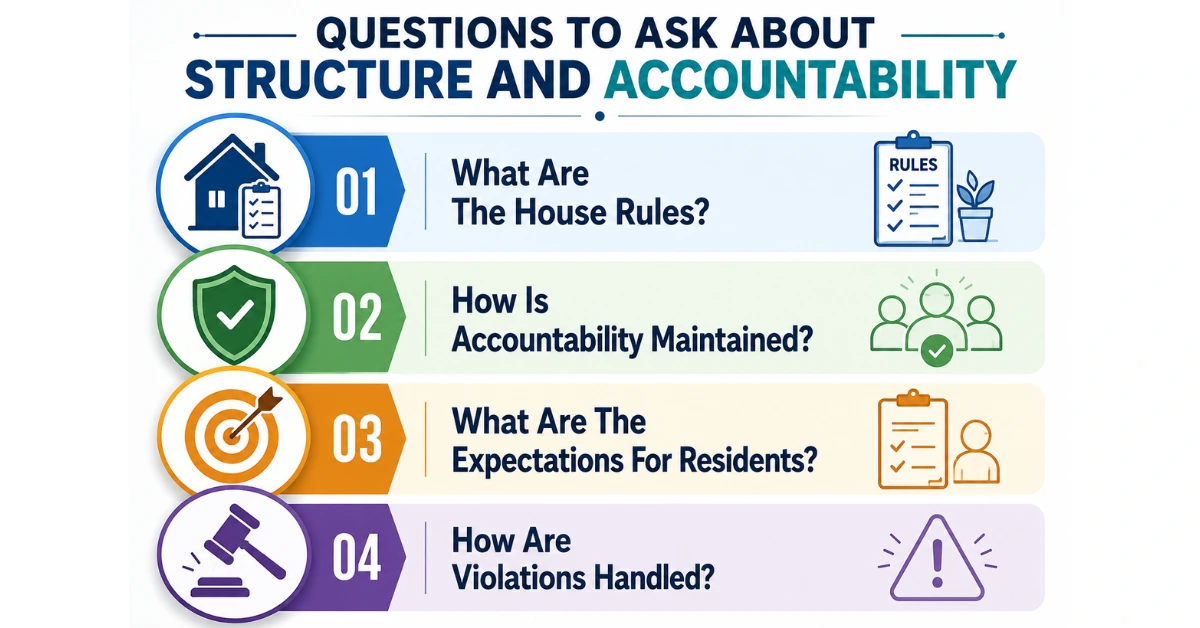
Structure and accountability often influence daily life in sober living more than any other factor. Understanding how expectations are communicated and enforced can help determine whether a home is a good fit.
What Are The House Rules?
Ask about curfews, guest policies, recovery participation requirements, shared responsibilities, and any expectations residents are expected to follow consistently.
How Is Accountability Maintained?
Understanding how accountability is monitored can provide insight into how the home supports recovery and encourages responsibility.
What Are The Expectations For Residents?
Ask about meeting attendance, employment requirements, household responsibilities, and participation expectations within the recovery community.
How Are Violations Handled?
Learning how challenges are addressed can help you understand whether accountability is applied consistently and fairly.
Many of these conversations become easier when you understand What a Structured Sober Living Environment Actually Provides and how structure supports recovery stability over time.
Questions To Ask About Daily Life And Support
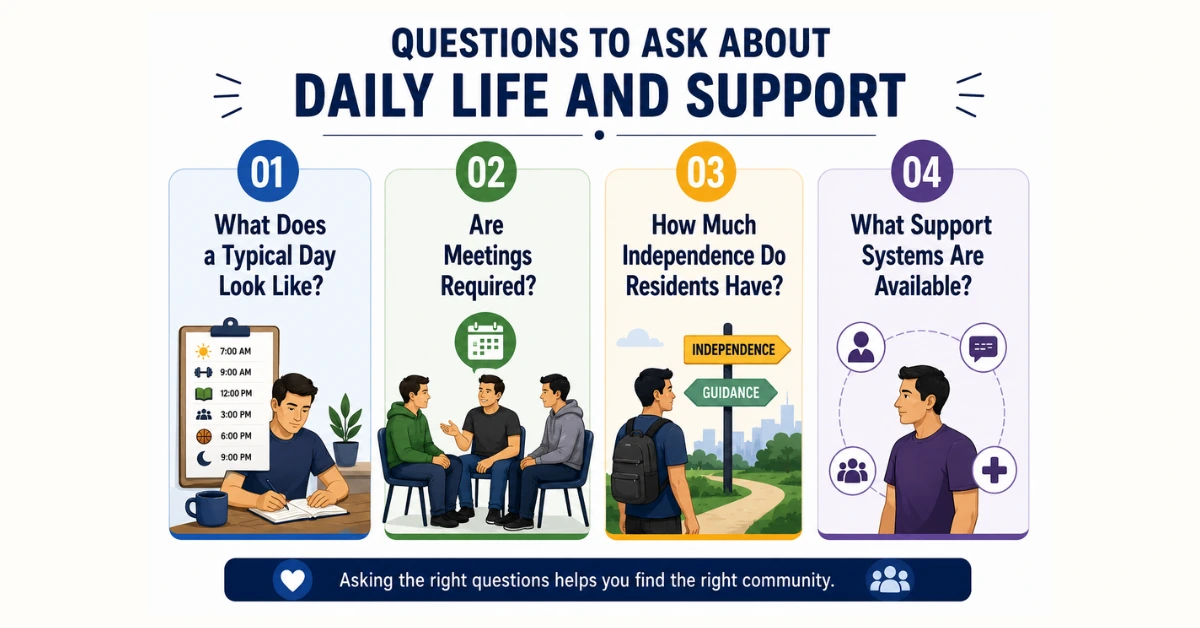
Daily life often influences the overall experience just as much as house policies. Understanding what everyday living looks like can help create realistic expectations.
What Does A Typical Day Look Like?
Ask how residents typically balance recovery activities, work, personal responsibilities, and community participation.
Are Meetings Required?
Understanding recovery participation expectations can help determine whether the home’s approach aligns with your needs and goals.
How Much Independence Do Residents Have?
Different homes offer different levels of flexibility. Understanding expectations can help determine whether the environment matches your stage of recovery.
What Support Systems Are Available?
Ask about peer support, house management, recovery resources, and any additional support available to residents.
For readers still exploring the broader role recovery housing plays, What Sober Living Actually Provides offers additional context on how these environments are designed to support recovery.
Questions To Ask About Community And Environment
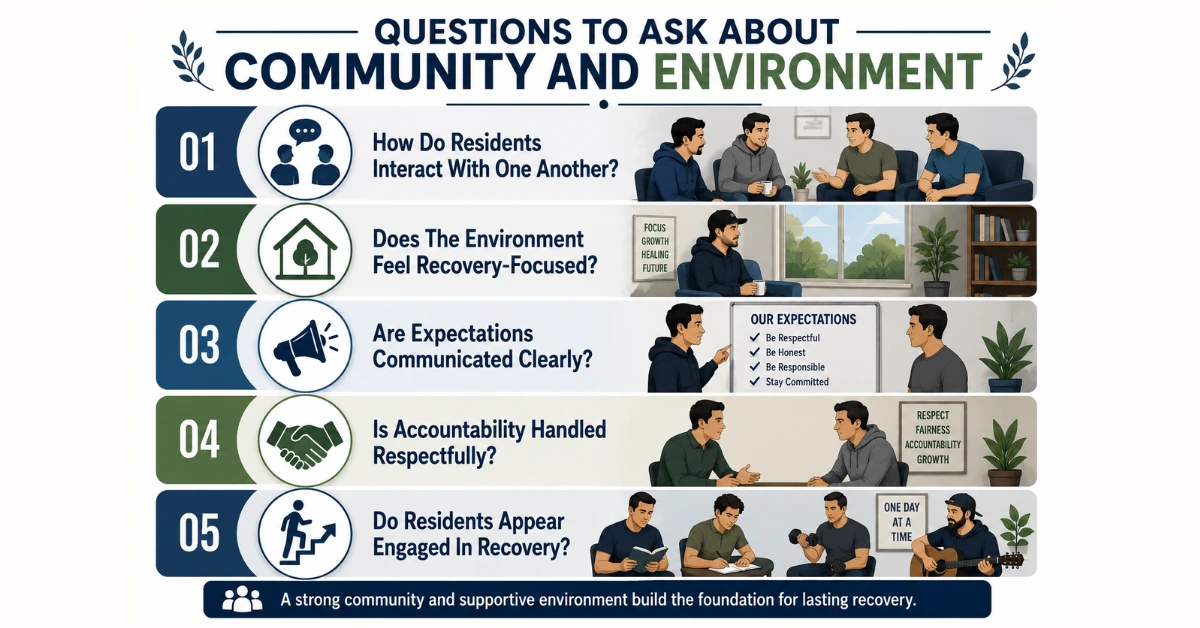
Instead of focusing on aThe people and culture within a sober living home can significantly influence the overall experience. Even homes with similar rules may feel very different because of their community atmosphere.menities or appearances, it can be helpful to use a consistent framework when comparing options.
How Do Residents Interact With One Another?
If possible, observe how residents interact during everyday moments rather than only during a scheduled tour, since those interactions often provide a clearer picture of the home’s culture.
Does The Environment Feel Recovery-Focused?
A recovery-focused atmosphere often helps reinforce healthy habits, accountability, and long-term recovery goals throughout the community.
Are Expectations Communicated Clearly?
Clear expectations can help reduce confusion, create consistency, and ensure residents understand their responsibilities within the home.
Is Accountability Handled Respectfully?
The way accountability is approached can influence trust, cooperation, and the overall experience of living within the recovery environment.
Do Residents Appear Engaged In Recovery?
Residents who actively participate in recovery activities often contribute to a stronger sense of community, support, and shared commitment.
When evaluating a home, pay attention not only to policies and procedures but also to the overall atmosphere. The environment itself can often reveal as much as the answers to your questions.
As you compare different environments, How to Choose the Right Sober Living Home provides a broader framework for evaluating overall fit.
Questions To Ask About Long-Term Recovery Planning
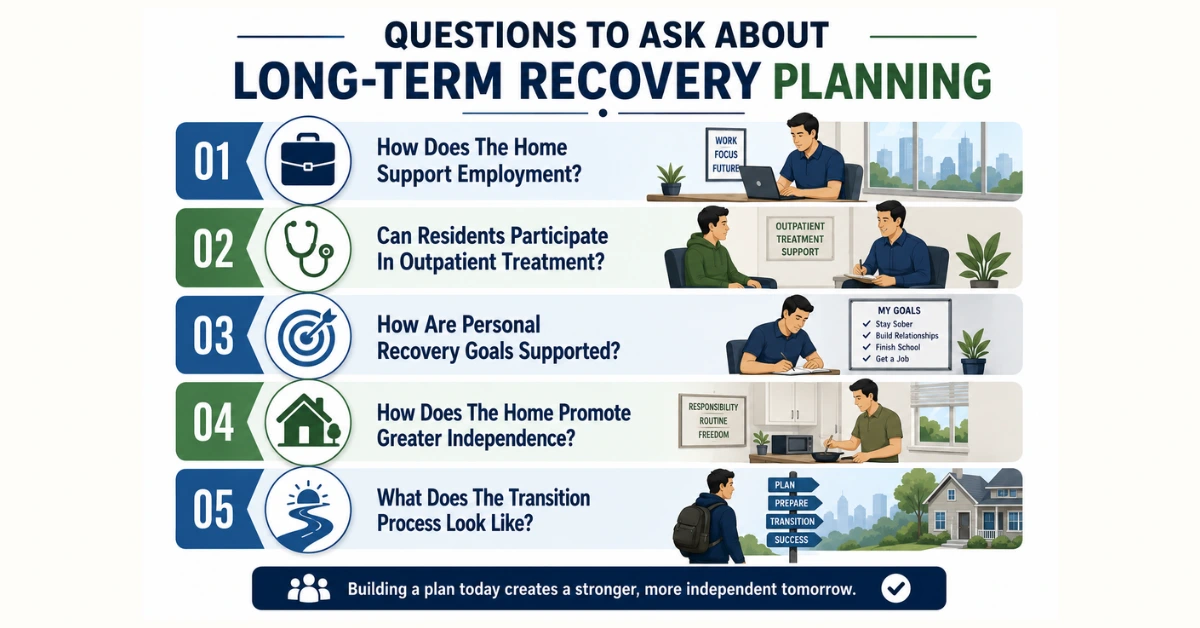
Sober living is often one part of a larger recovery plan rather than a long-term destination. Asking questions about future planning can help determine whether a home supports both immediate recovery needs and long-term goals.
How Does The Home Support Employment?
If you are currently working or planning to return to work, ask how the home accommodates employment responsibilities while maintaining accountability and recovery commitments.
Can Residents Participate In Outpatient Treatment?
Understanding whether outpatient services can be integrated into the recovery plan can help ensure continued support when additional care is needed.
How Are Personal Recovery Goals Supported?
Ask how the home helps residents stay focused on individual recovery objectives and whether goal-setting is encouraged during the recovery process.
How Does The Home Promote Greater Independence?
Many residents eventually transition toward increased responsibility. Understanding how independence is developed can provide insight into long-term planning.
What Does The Transition Process Look Like?
Learning how residents typically prepare for life after sober living can help you understand how the home approaches long-term recovery stability.
These conversations often provide valuable perspective beyond day-to-day living and can help determine whether a home supports the next stage of recovery as well as the current one.
Location may also influence long-term planning. Some individuals benefit from remaining close to existing support systems, while others prefer a fresh start. Should You Stay Local or Move for Recovery? explores that decision in greater detail.
The Goal Is Finding The Right Fit, Not The Perfect Home
No sober living home will be the ideal fit for every person. What matters most is whether the environment aligns with your recovery goals, support needs, and personal circumstances.
Factors that often influence fit include:
- Level of structure
- Accountability expectations
- Recovery support
- Community culture
- Daily routines
- Independence level
- Long-term recovery goals
A home that works exceptionally well for one person may not be the best choice for someone else.
As you narrow your options, remember that evaluating fit is different from evaluating outcomes. What Makes Some Sober Living Homes More Effective? explores factors that often contribute to successful recovery environments.
The goal is not to find a perfect sober living home. It’s to find an environment where the structure, accountability, and community align with the type of recovery support you need right now.
The Right Questions Can Lead To Better Decisions
Choosing a sober living home can feel overwhelming, but asking thoughtful questions often makes the process more manageable. Understanding structure, accountability, support systems, community culture, and long-term planning can help you compare options with greater confidence.
The more informed you are, the easier it becomes to identify an environment that aligns with your recovery goals and support needs.